Research
![“बैगी CLOTHES NOT पापा के KAPADEY ” [BAGGY CLOTHES NOT DADDY’S CLOTHES]. Illustration by Santanu K. Mahalik, 2023, New Delhi. Reproduced with permission of the artist.](https://images.squarespace-cdn.com/content/v1/64a523c69293b6303845645e/1781272193406-9PU7PJBS6EZJ2W8X5VE4/Figure+0.0.jpg)
“बैगीCLOTHES NOT पापा के KAPADEY” [BAGGY CLOTHES NOT DADDY’S CLOTHES]. Illustration by Santanu K. Mahalik, 2023, New Delhi. Reproduced with permission of the artist.
Behind the Seams:
Fashion Design and the Politics of Postcolonial Heritage in India
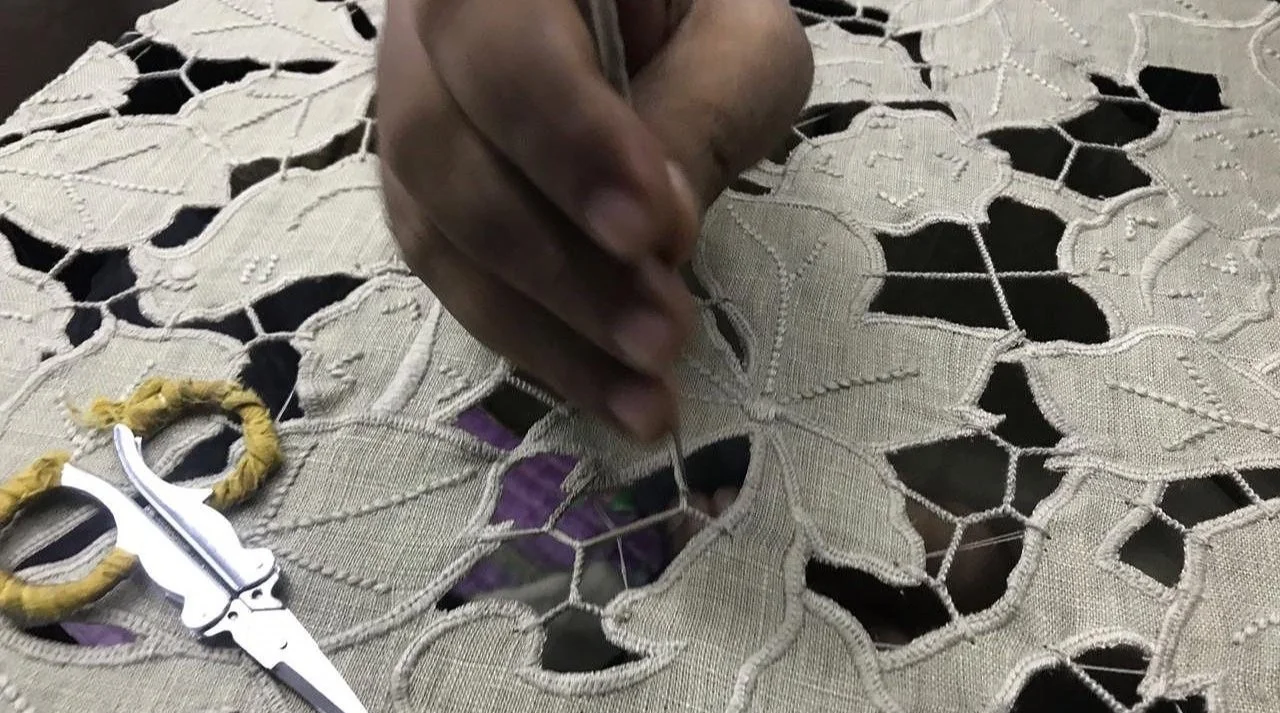
My first book—which I’m currently drafting—draws on three years of ethnographic and archival fieldwork in New Delhi, Mumbai, and several smaller cities across Uttar Pradesh and Madhya Pradesh, alongside collections research in New York. It centers on the National Institute of Fashion Technology (NIFT) in New Delhi, India’s government-run fashion academy, where students from across the country — many from marginalized caste, tribal, religious, and gender-nonconforming communities — train as designers under conditions of rising Hindu nationalist authoritarianism. I trace how “craft heritage” has become the central currency through which competing political projects stake their claims on Indian identity, and how young designers develop quiet, sophisticated strategies for layering materials and meanings: producing work that satisfies official requirements while embedding alternative visions of belonging. The research was supported by the Royal Anthropological Institute, the Smithsonian Institution, the Society for Visual Anthropology, and the Textile Society of America.

Design and Diplomacy
A second project recovers a less-told history of what I am calling “design diplomacy” in the mid-twentieth century. I am interested in how American and Indian women, working through the United Nations Technical Assistance Program in the 1950s and 60s, built cultural institutions that ran outside the usual Cold War scripts. These were quiet circuits of expertise — designers, weavers, museum curators, and home economists moving between Delhi, Bangalore, New York, and Seattle — and they shaped a vision of internationalism that the dominant geopolitical narrative tends to overlook. The project grew out of my fellowship at the Costume Institute of the Metropolitan Museum of Art and is unfolding through a forthcoming article and a special gallery exhibition at the Henry Art Museum Centennial, University of Washington (with Swagato Chakraborty and Nina Bozicnik).
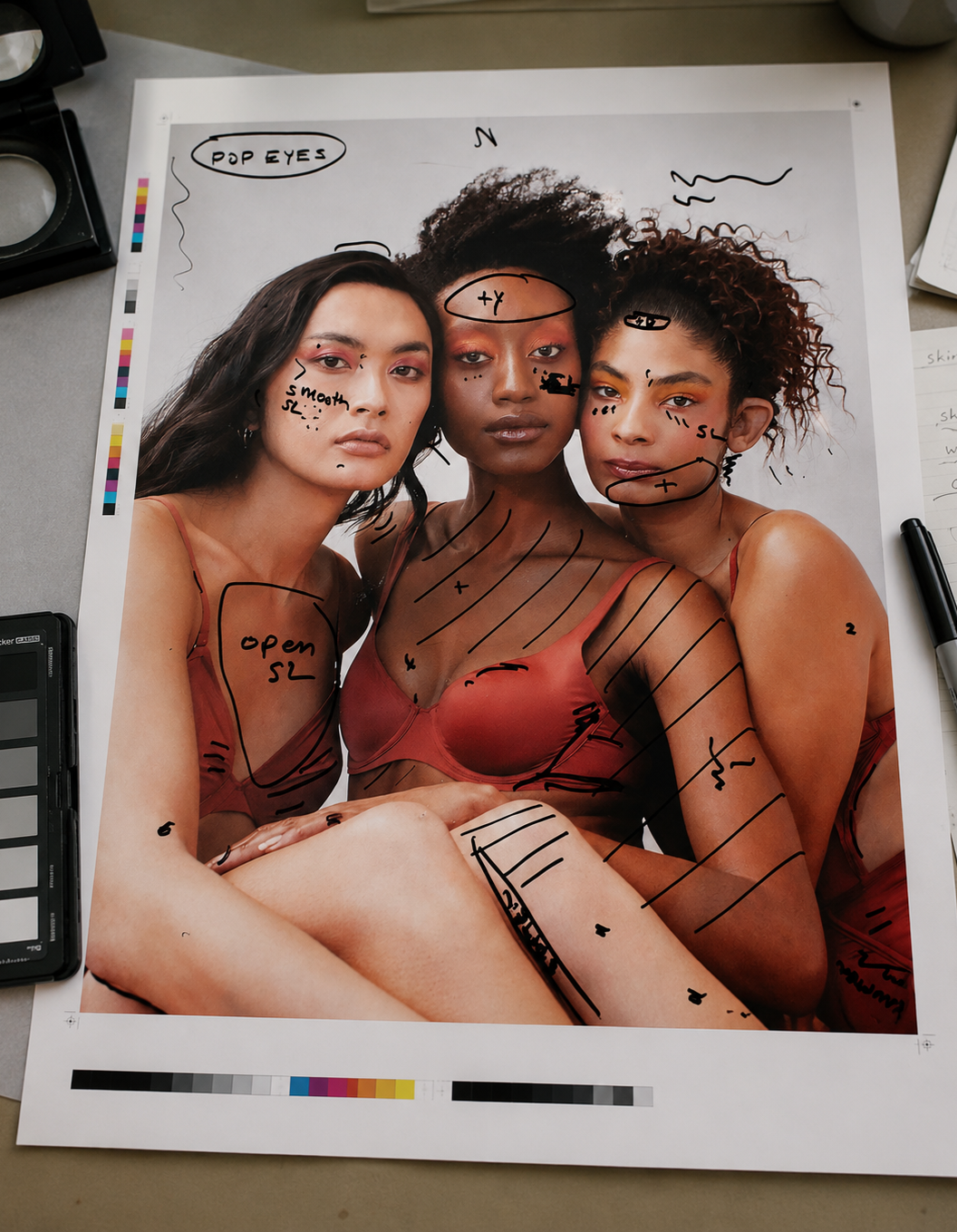
Photo courtesy of Sophie Kietzmann and Liz Mooney at The PostCo, Brooklyn, 2021.
Design Intimacies:
Technologies of the Body
A third strand of work, developed across articles and a film, takes up the question of how the body itself becomes a design object. Retouch (2022, 18 min), my documentary about three generations of professional photo retouchers in New York, follows the people whose craft produces the “perfect” skin and proportions we see in fashion magazines and ad campaigns. A companion article for Visual Anthropology Review extends an analysis of the moral questions that retouching (as a specialized form of photographic expertise) has begun to raise as beauty standards shift toward “naturalness” and racial and gender “inclusion.” A forthcoming piece in American Anthropologist, examines comprable dynamics in India, focusing on practices of anthropometric measurement and standards design. It follows a team of New Delhi designer-researchers working to replace the European-derived clothing size standards that have governed the country’s apparel industry since the 1980s. Together, these projects ask how the standards of what I call “embodied citizenship” — what type of embodied experiences the worn world of consumer commodities afford — become carriers of cultural and political value, and what it takes to remake them.